Brand Positioning and Product Management: The Gucci Case
My bachelor's thesis: how Gucci uses brand identity, product strategy and creative rebranding to defend its position in the global luxury market.
Read more
I'm a Marketing student at LUISS Guido Carli, majoring in Data Analytics, with a background in Economics and Business Management from LUMSA. I'm currently on an Erasmus semester at the University of Amsterdam.
My goal is a career in brand management in luxury and fashion. These sectors ask a brand to stay consistent while trends, creative directors and customers change. My Bachelor's thesis on Gucci looked at exactly that: how a house can reinvent itself and remain recognisable, largely through the products it chooses to make.
I approach brands analytically as well as creatively. I use R, SPSS and Stata to turn consumer data into marketing decisions, and I follow the industry closely as a member of the LUISS LFC Luxury Club.
Outside my studies, I design and crochet my own garments, which has given me a hands-on understanding of product, craftsmanship and detail.
My bachelor's thesis: how Gucci uses brand identity, product strategy and creative rebranding to defend its position in the global luxury market.
Read moreAs team leader of Novatek, I steered a multi-brand portfolio in the Sonites market through 10 decision rounds and finished first out of six competing firms.
Read moreA live brief from Fater: an integrated communication plan to grow the Coccole Pampers app among single parents. Ranked 3rd of 12 teams.
Read moreA digital strategy to grow Ben & Jerry's in Italy by stepping out of the comparison with artisanal gelato. Big idea: “Il piacere di fermarsi, con Ben & Jerry's”.
Read moreLuxury is more than high-quality products: it is a system of symbolic, emotional and relational values that lets a brand stand apart and build lasting relationships with its customers. The thesis asks what has allowed Gucci, a symbol of Made in Italy, to relaunch itself several times in its history while keeping strong international leadership.
Gucci's strength lies in balancing coherence and innovation. Its core identity of heritage, craftsmanship and bold creativity stays recognisable across different creative directors, while it is constantly reinterpreted in new forms, from Instagram fashion shows to in-store windows.
On the product side, Gucci is moving towards a more elevated and controlled luxury: less reliance on volume, more emphasis on quality, craftsmanship and selective distribution, supported by a global omnichannel ecosystem. Its main challenges are keeping young consumers loyal and protecting exclusivity from overexposure.
The conclusion: success in contemporary luxury depends on combining heritage and innovation, exclusivity and inclusivity, craft tradition and digital languages, or in Gucci's case, reinventing luxury while staying true to itself.
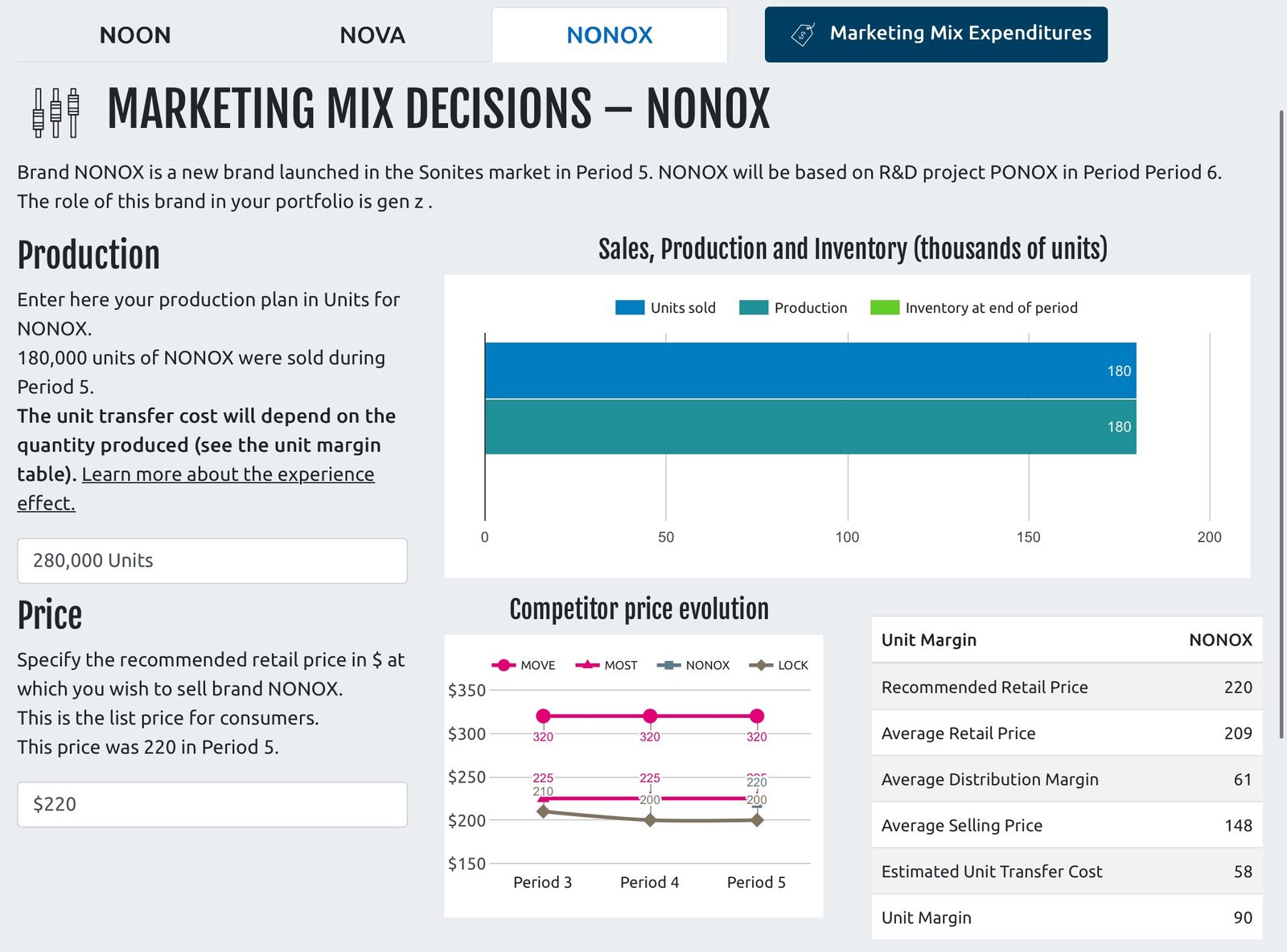
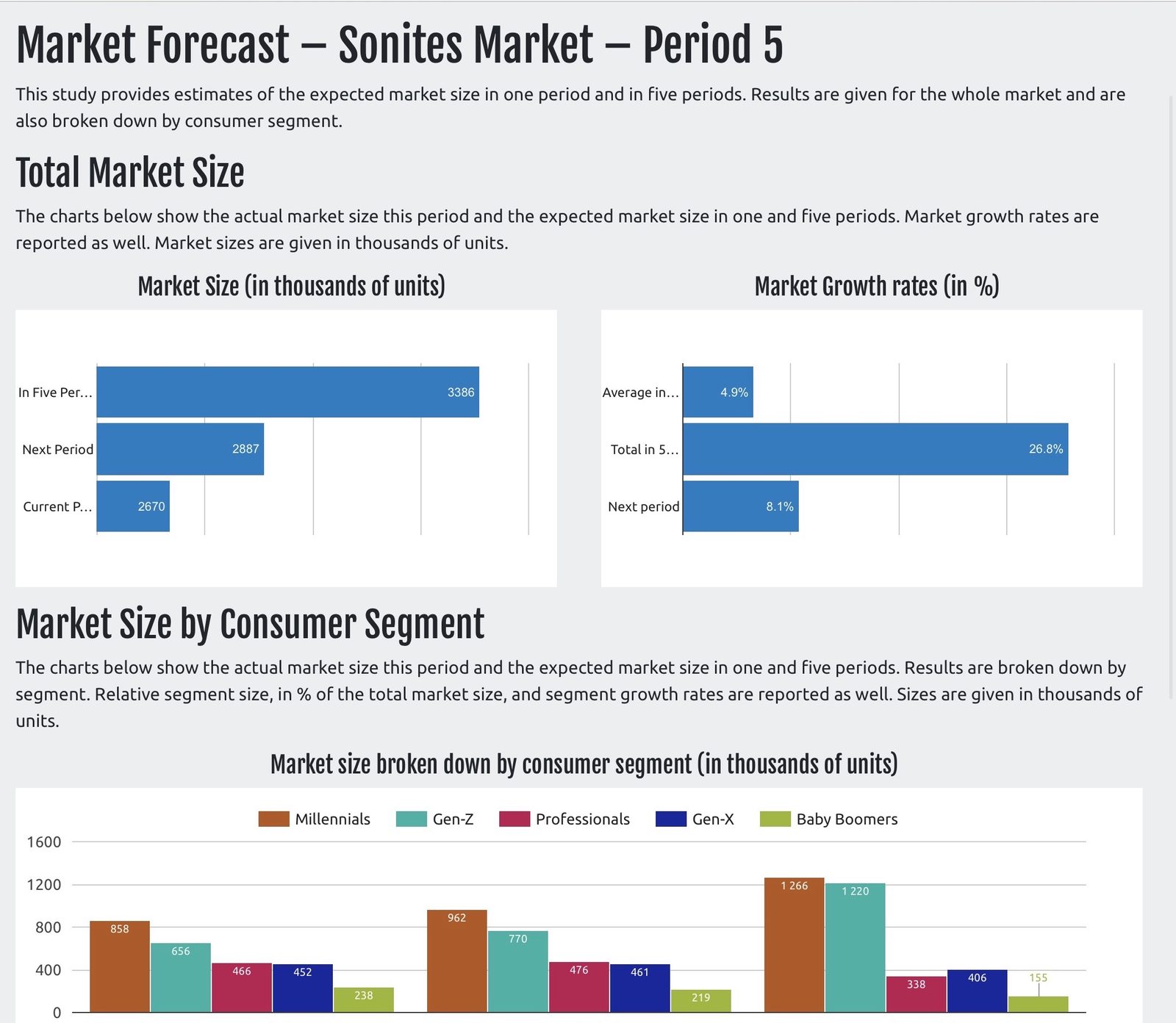
Markstrat is a competitive simulation in which teams run a firm in a consumer durables market, here the Sonites market. Each round, every decision on positioning, pricing and budget changes the market for everyone else.
Novatek finished first out of six firms. I presented our performance analysis, the strategic pivots we made, and a 5-round forward plan to faculty.
Index, 1,000 = value in Period 0. Data from the Markstrat dashboard.
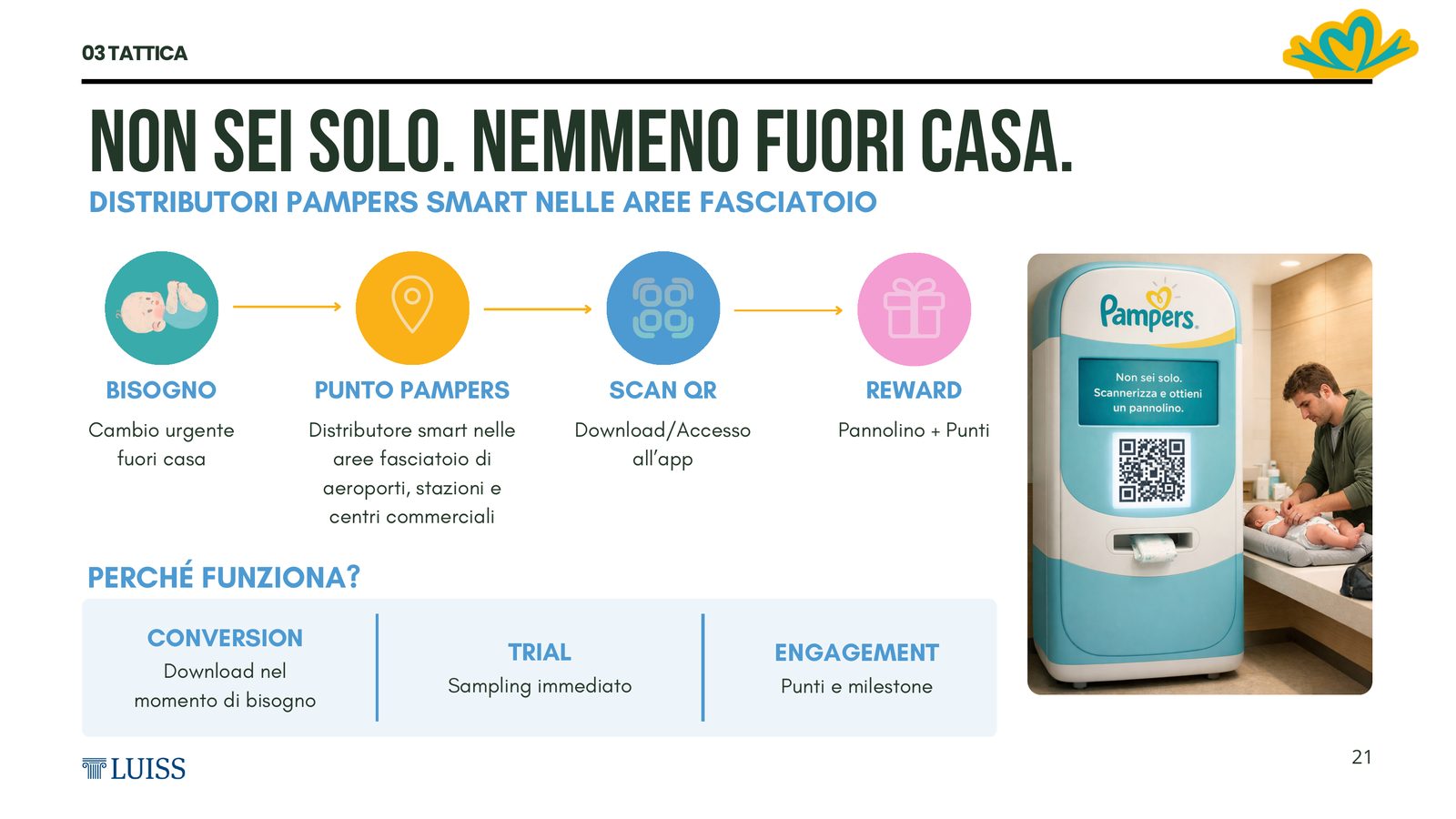
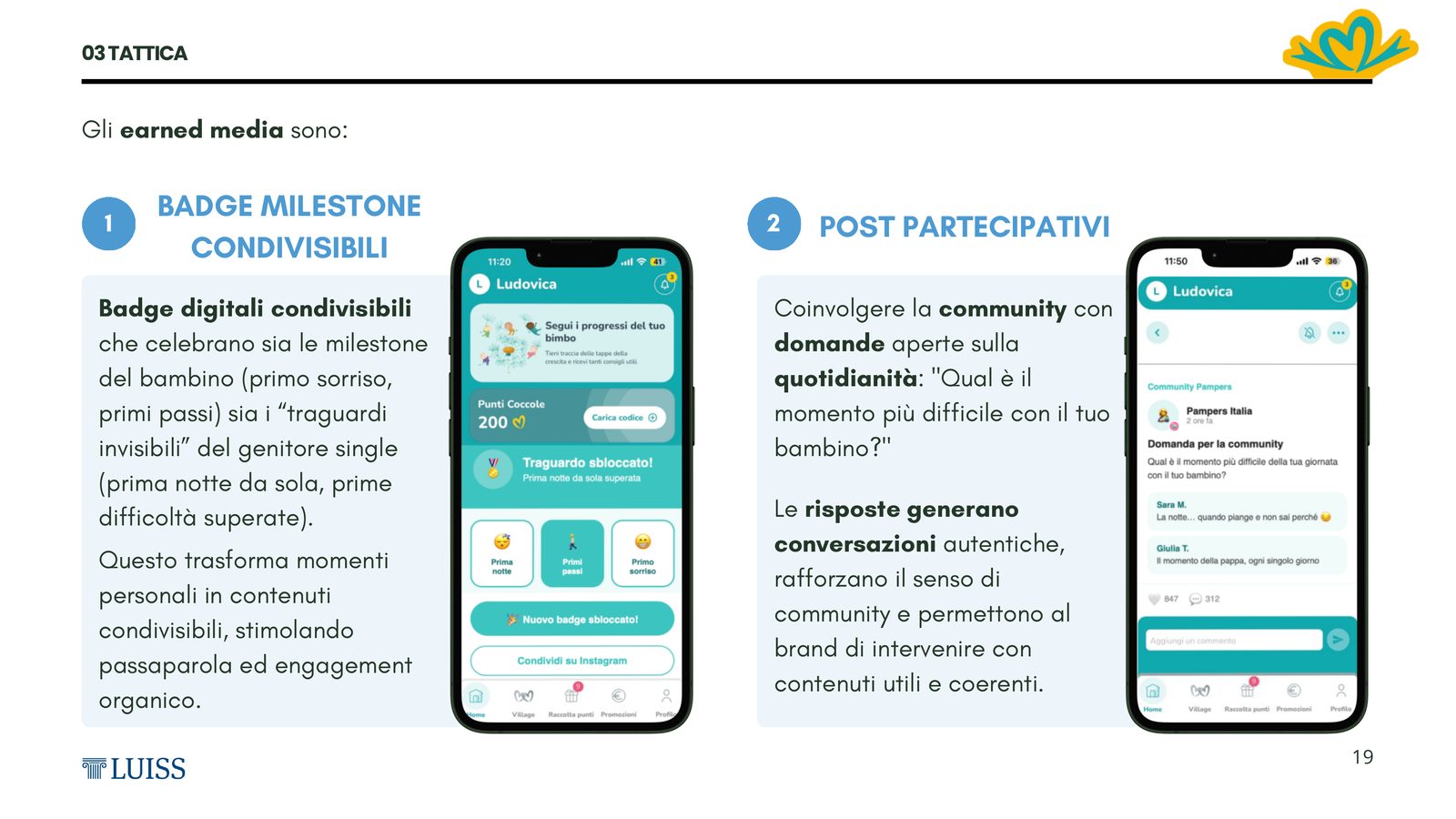
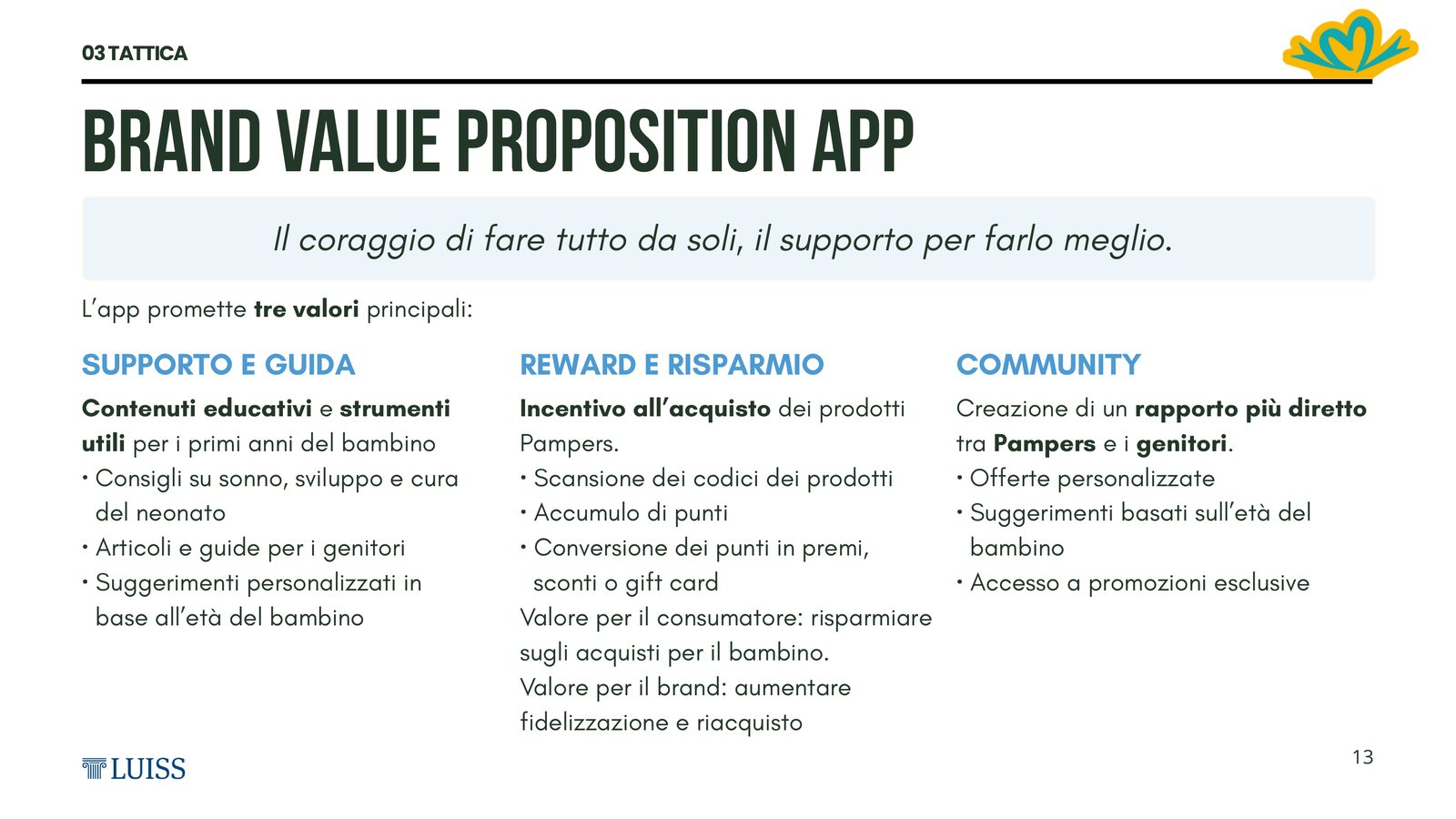
Fater asked student teams to build an Integrated Marketing Communication plan for Pampers. We focused on the Coccole Pampers app: a strong product with low awareness. The work was reviewed across two graded milestones and shared with Fater's management.
We chose an underserved target: single mothers and fathers aged 20 to 40 with children up to two years old, about 2 million people in Italy. The app's promise became “Il coraggio di fare tutto da soli, il supporto per farlo meglio” (the courage to do it all alone, the support to do it better).
We delivered a 40-slide strategic deck and a 20-page methodology report, incorporated stakeholder feedback between milestones, and ranked 3rd out of 12 teams.
Young Italian consumers know Ben & Jerry's, and those who try it like it, but few make the first purchase. The barrier is cultural: artisanal gelato is the benchmark for authenticity and freshness, so packaged ice cream always loses the comparison.
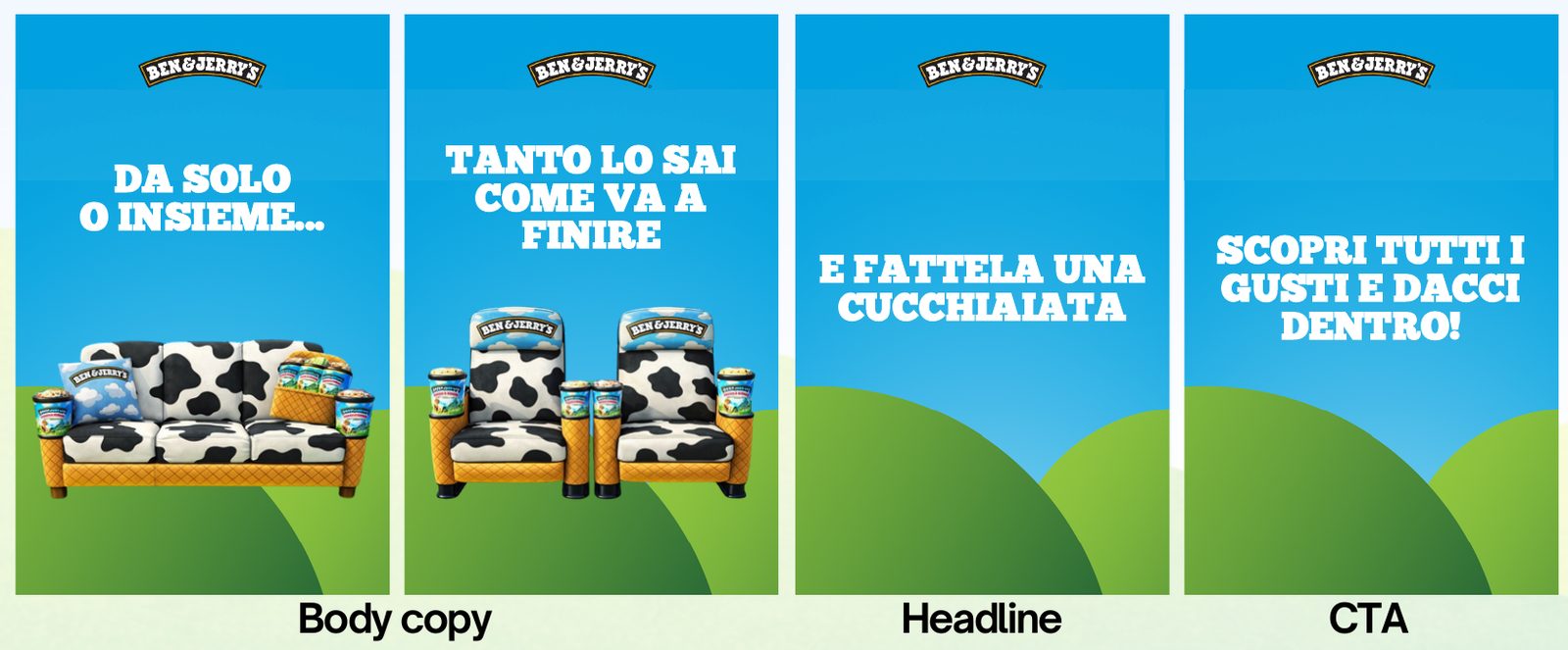
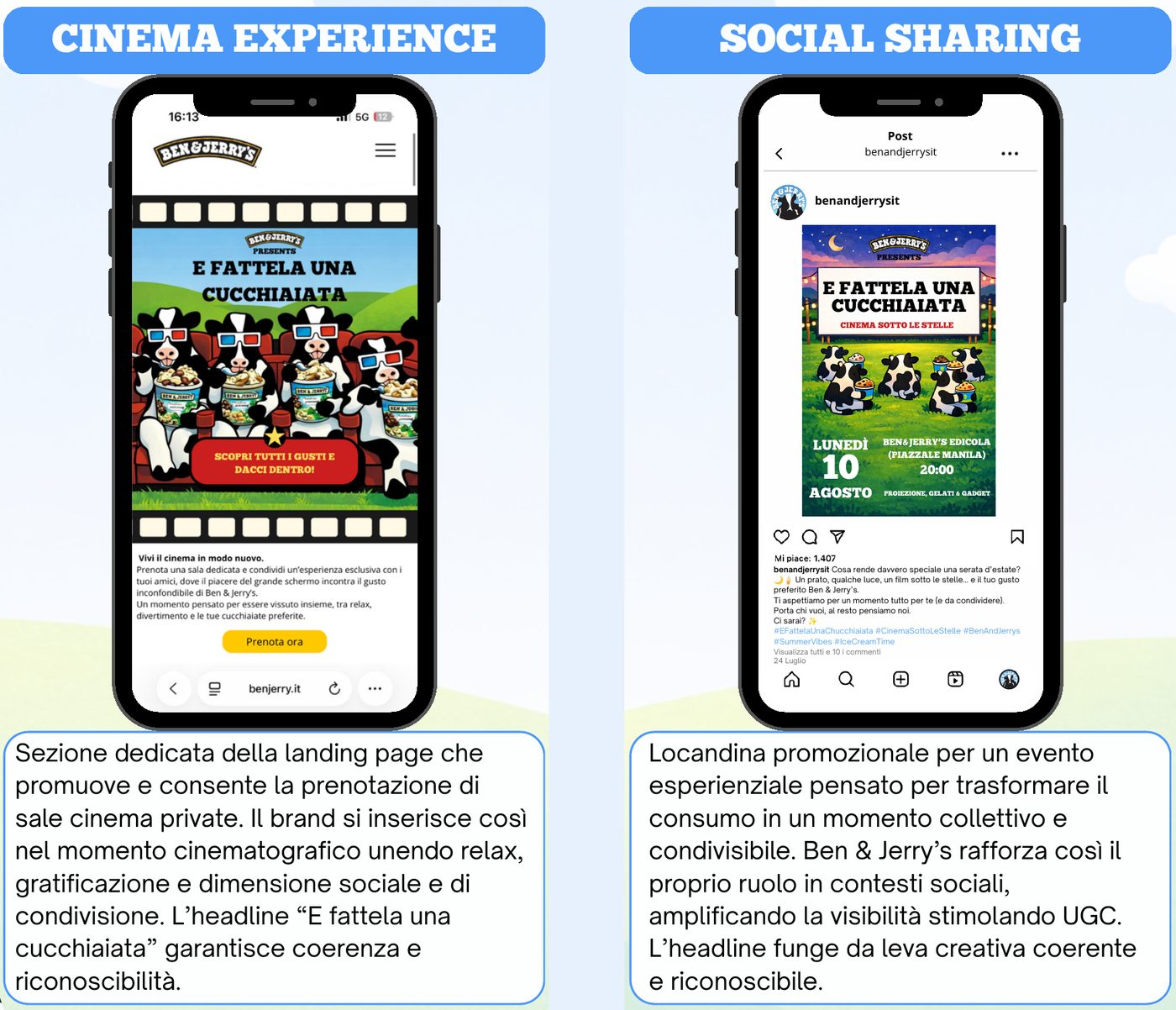
Instead of competing with gelato, we moved Ben & Jerry's into a different moment: not a gelato to eat while walking, but a dessert experience for when you stop, to watch a film, start a series or share an evening. Big idea: “Il piacere di fermarsi, con Ben & Jerry's”. Headline: “E fattela una cucchiaiata”.
We presented the go-to-market recommendation to representatives of The Magnum Ice Cream Company and to faculty.